eShop
eShop
 English

Are you still struggling with low transfer efficiency and fuzzy bands in your Western Blot experiments? You’ve repeated the runs, swapped antibodies, titrated concentrations, adjusted exposure times – yet the results remain unsatisfactory.
Before doubting your antibodies or questioning your technique, consider this: in Western Blot, whether proteins are stably and uniformly transferred onto the membrane often dictates the outcome of downstream detection. In this process, the type and pore size of the transfer membrane, as well as the compatibility of the blotting filter paper, directly affect transfer efficiency and band quality.
1. Membrane Material: NC or PVDF?
The two most commonly used membrane materials in Western Blot are nitrocellulose (NC) and polyvinylidene fluoride (PVDF). Their key differences in Western Blot application are summarised below:
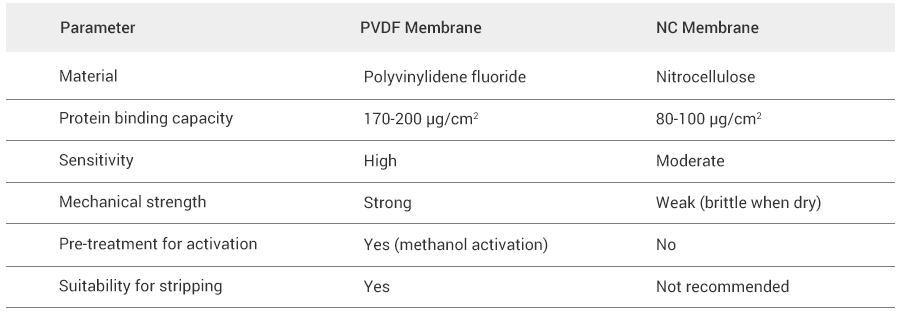
Therefore:
- NC membrane is ideal for conventional and one-off Western Blot assays.
- PVDF membrane is better suited for low-abundance protein detection, multiple stripping/re-probing assays, and high-sensitivity applications.
2.Membrane Pore Size: 0.45 μm or 0.2 μm?
Beyond material, pore size is equally critical. Common housekeeping proteins like β-actin and GAPDH are typically well-transferred on 0.45 μm membranes, whereas 0.2 μm membranes are specifically designed for low-molecular-weight proteins.

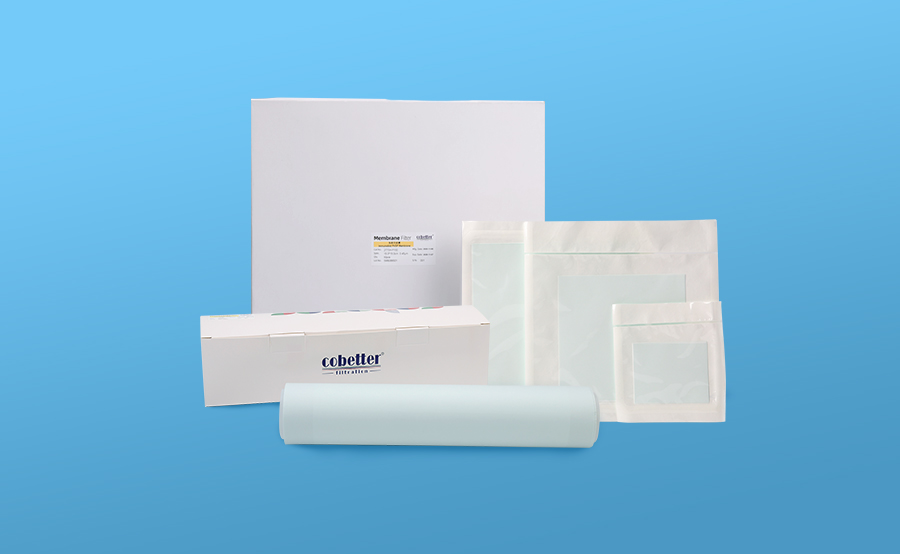
Cobetter offers high-performance PVDF transfer membranes in both 0.2 μm and 0.45 μm pore sizes, delivering high sensitivity, efficient protein transfer, higher band resolution, and reliable detection of low-abundance targets.
3. Choosing Blotting Filter Papers
In the Western Blot transfer assembly, blotting filter paper is one of the core components that ensure transfer uniformity.
The primary functions of blotting filter paper:
- Creating uniform pressure - to ensure intimate contact between the gel and membrane, preventing uneven transfer.
- Forming a buffer reservoir - to maintain continuous conductivity and stabilise the electric field.
- Preventing air bubbles - high-quality blotting filter paper offers good conformity, minimising bubble entrapment.
High-quality blotting filter paper is typically made from high-purity fibers, featuring uniform thickness, strong absorbency, and good mechanical strength. Commercially available blotting filter papers range in thickness from ultra-thin to extra-thick.
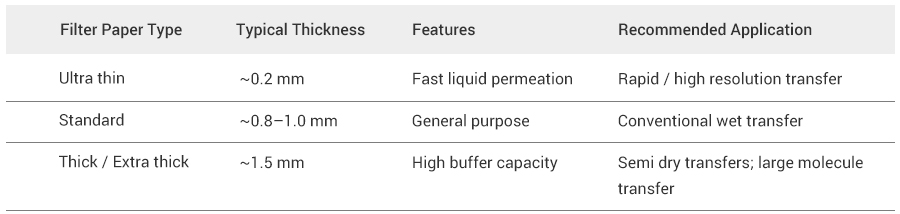
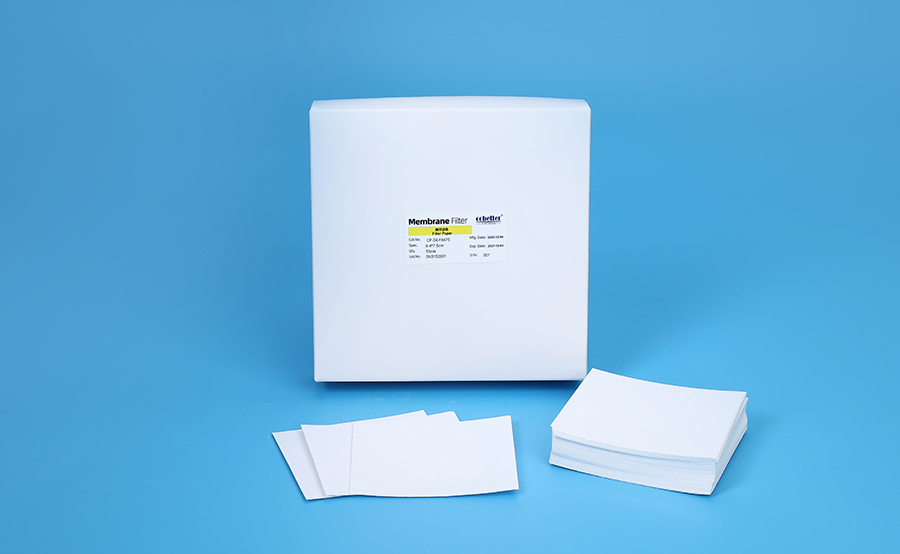
Cobetter provides two specifications of pre-cut, high-quality cotton-cellulose blotting filter papers: ultra-thin (0.38 mm) and standard (0.8 mm), with excellent surface flatness. The 7.5 × 8.4 cm size fits most commercial transfer tanks for convenient and efficient use.
Summary
In practice, the rational selection of membrane type and pore size – based on molecular weight and abundance of target protein and experimental requirements – is essential to achieve efficient and uniform protein transfer. Coupled with high-quality blotting filter papers, you can further enhance transfer efficiency and band sharpness, ultimately obtaining more consistent and reliable results in your Western Blot experiments.