 eShop
eShop
 English

Overview of ADC Industry
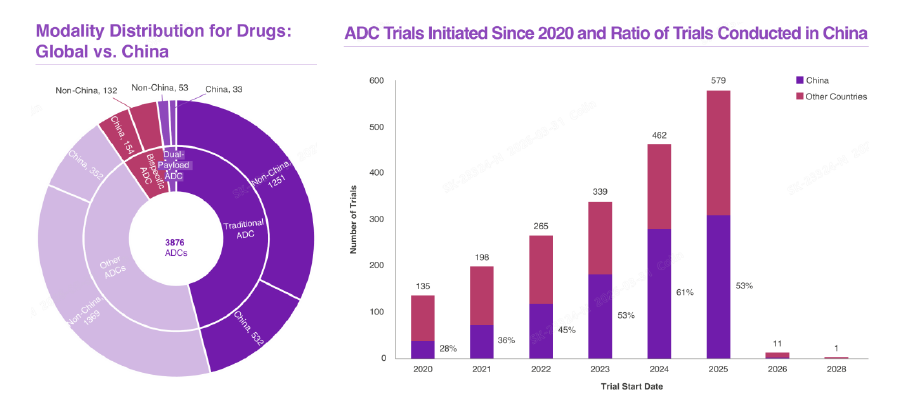
Antibody-drug conjugates (ADCs) stand out as the segment within the biopharmaceutical landscape where Chinese companies lead globally. This leadership is confirmed by two key metrics: Chinese companies account for over 50% of global ADC clinical trials, and their overseas BD deals continue to set new records. Furthermore, their innovative models and cutting-edge capabilities—particularly in areas like bispecific ADCs—have made ADC drugs a central focus in the pipelines of multinational corporations, fueling explosive growth momentum. From a regulatory perspective, improving ADC drug production and quality control standards is critical to ensuring their safety, efficacy, and quality consistency.
Challenges and Considerations of ADC Industry
As the industry matures and more projects move toward commercialization, the focus of ADC development has transitioned from clinical efficacy and safety toward process consistency and scalability. This shift brings new priorities: process robustness at production scale, cost-effectiveness, transferability of processes and methods, and future control strategies—all of which must be addressed to meet regulatory requirements and ensure stable supply.
Compared to monoclonal antibodies (mAbs), ADC drugs require different process designs and considerations in three key areas:
1. Payload handling: The presence of payload imposes stricter requirements for operational containment, cleaning design, and payload removal.
2. Solvent compatibility: The conjugation process uses organic solvents, requiring thorough evaluation of the compatibility of all materials in direct contact.
3. Adsorptive losses: Due to the unique properties of ADC drugs, special care must be taken to minimize adsorptive losses during filtration and sterile filtration steps.
This article walks through a classic ADC process, discussing the potential challenges, regulatory considerations, and corresponding solutions during conjugation, purification, and formulation.
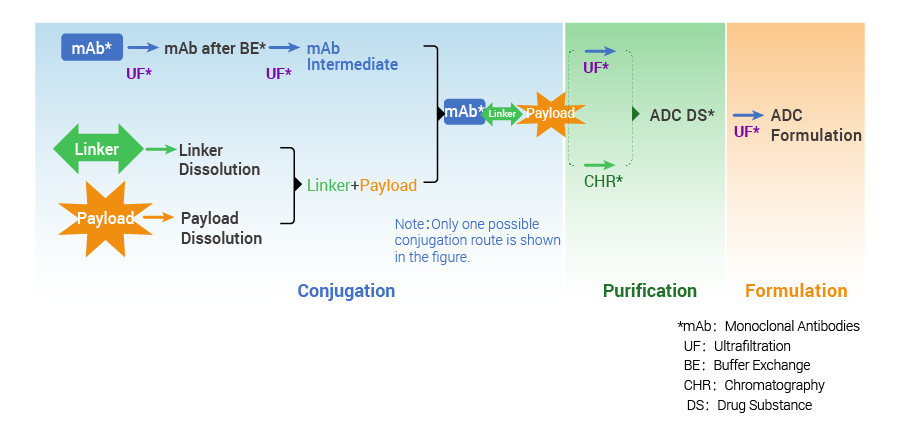
Challenges and Solutions to ADC Process
Safety and Cleaning Validation
Single-Use Conjugation Reactors and Connecting Tubing
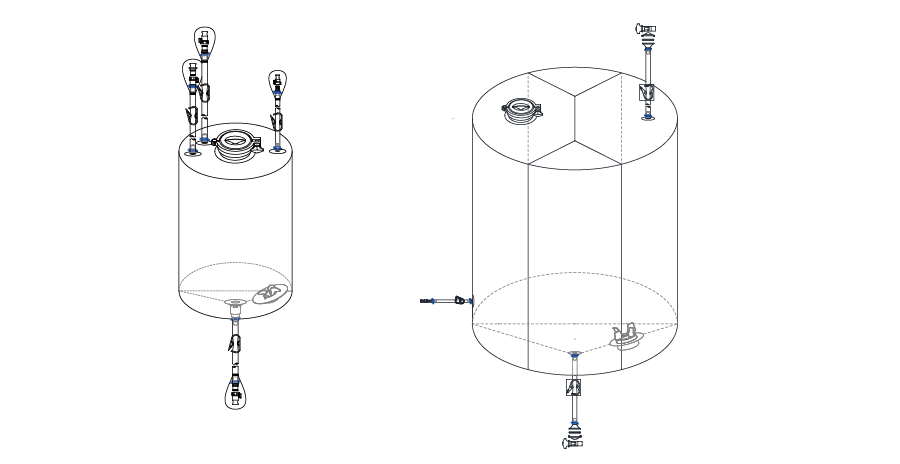
The conjugation stage must ensure operator safety, given the high activity and safety risks posed by the payload. To address these concerns, critical operations are typically performed in closed system such as isolators, including the payload weighing, dissolution, and conjugation with the linker. Single-use conjugation reactors and connecting tubing are ideally suited to meet the stringent requirements for containment, cleaning validation, and safety. In one case, the client turned to Cobetter and selected single-use conjugation bags ranging from 50 L to 500 L, not only meeting ADC processing requirements but also delivering excellent scalability and consistency. Moreover, the system can be flexibly designed and configured to accommodate different product or process needs with maximum customization.
Ultrafiltration(UF) Membrane Cassettes and Single-Use UF Systems
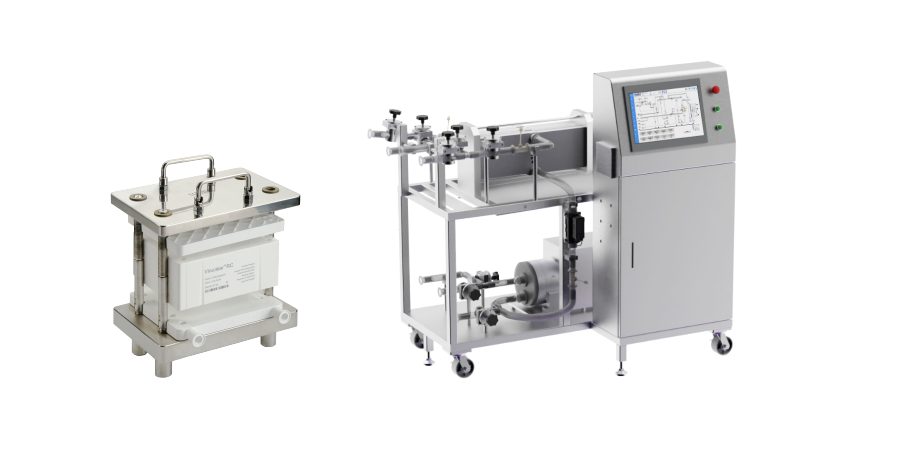
For single-use UF flow path assemblies, options include single-use flow distributors and spacers that ensure no contact between the fluid and the holder, eliminating the need for post-use cleaning and validation. These solutions can meet process demands from R&D through production scale (pilot-scale and larger configurations shown in the lower-left image). For applications requiring automation and data recording, customized single-use UF systems are available. These systems integrate membrane cassettes, tubing, sensors, single-use flow distributors, and single-use pumps. A representative example is shown in the lower-right image: a single-use UF system designed and manufactured for a client, supporting up to 15 m² of membrane area, which was successfully deployed in the client's production.
Another important factor in the risk assessment for single-use technology is that downstream UF/DF serves as a purification step that reduces and removes leachable small-molecule impurities. The adsorption-elution chromatography before UF/DF also contributes to the clearance of these impurities. Regulatory guidance supports this view. ICH Q3D explicitly states that UF/DF can effectively remove elemental impurities, and the draft USP <1665> identifies UF/DF and similar steps that clear extractables as risk-mitigating factors, meaning that the risk of extractables and leachables (E&L) in purification steps before UF/DF is generally considered to be relatively low. Single-use solutions offer a combination of speed, flexibility, customization, and low risk, well addressing both process and regulatory requirements.
Impurity Removal
Removing free payload is a critical challenge in ADC processes. Typically, an excess of payload is added during conjugation, to achieve the desired DAR and reaction efficiency. After conjugation, the remaining free payload and payload-linker become impurities that must be eliminated. Industry currently relies on two mainstream approaches: UF and chromatography. However, both have limitations. Due to the hydrophobic nature of certain payload, UF often achieves poor removal efficiency, sometimes requiring 20 diavolumes or more. This dramatically extends processing time and can compromise product stability. Meanwhile, in enzymatic conjugation processes, UF cannot remove enzymes at all—chromatography or alternative methods are required. To address these challenges, perhaps the following approaches perform better.
Activated Carbon Depth Filters
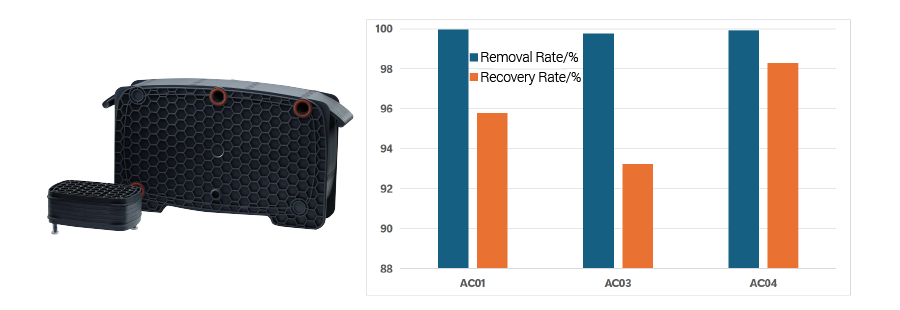
Activated carbon depth filters are widely used in pharmaceutical industry for decolorization and endotoxin removal. In ADC processes, it proves equally effective at removing free payload-related impurities. A single pass through an activated carbon depth filter can eliminate over 95% of residual payload impurities, with a wide and easily controllable range of operating parameters. Project feedback confirms that this technology adapts well to various payload types. This makes it particularly valuable for newer, increasingly common payload—such as camptothecin derivatives—that UF alone struggles to remove efficiently. By integrating activated carbon depth filtration with UF, it can significantly boost payload removal rates and substantially improve overall production efficiency.
Membrane Chromatography
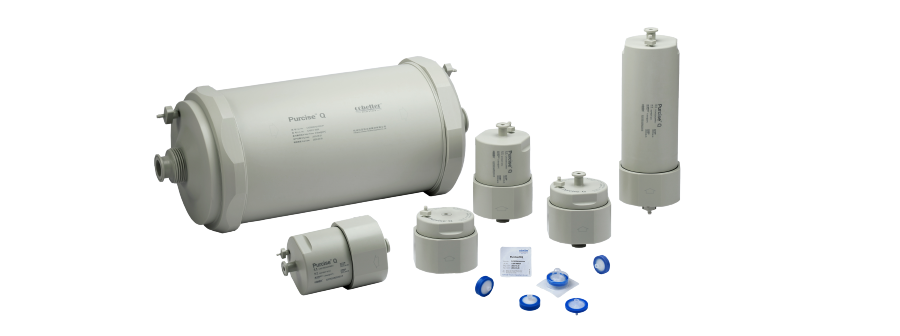
Compared to UF, chromatography is operated under milder conditions with less impact on ADC products. Beyond removing free payload, it can also eliminate aggregates and other impurities. For enzyme removal after enzymatic conjugation, chromatography remains the preferred method. However, traditional resin-based chromatography comes with notable drawbacks: high costs, reduced resin lifespan due to organic solvents, and the need for large chromatography systems that strain budgets and facility space. This is where membrane chromatography offers a compelling alternative. It delivers higher binding capacity and flow rates, meaning fewer consumables and shorter processing time. It also eliminates column packing and unpacking, providing greater operational convenience, flexibility, and a smaller footprint. Client feedback confirms that Cobetter's membrane chromatography significantly outperforms traditional resins, and head-to-head comparisons with competing products have shown twice the binding capacity.
Compatibility and Adsorption
Chemical Compatibility
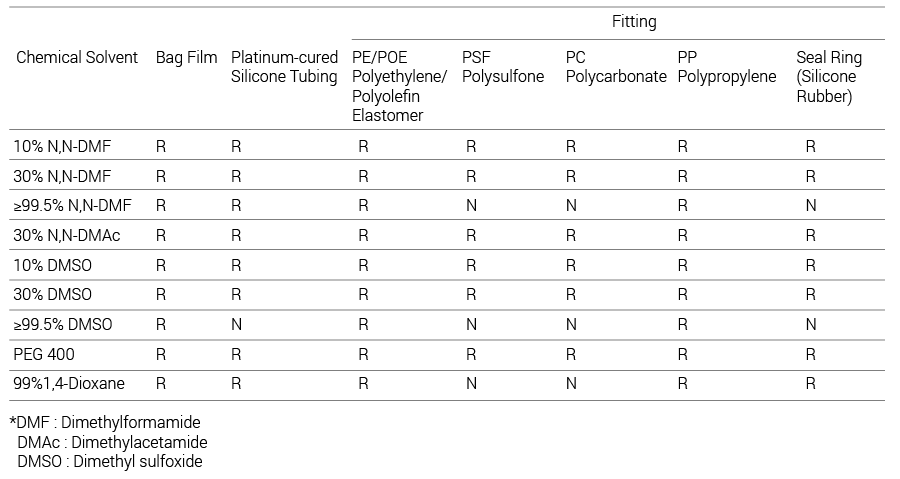
ADC products call for special inspection. Risk assessments and/or compatibility studies must be conducted on containers that come into direct contact with the product during manufacturing. The single-use system and the process should be evaluated in compatibility, including E&L, to confirm suitability. High-concentration composite solvents used in conjugation, such as DMAc and DMSO, warrant particular attention. To address these requirements, E&L studies have been performed on solvents and Cobetter's single-use products, based on the chemical reagents and concentrations likely to be encountered in ADC conjugation processes. Corresponding validation reports are available to ensure conjugated product quality and to provide comprehensive technical support for future regulatory submissions. The table below lists compatibility with commonly used ADC reagents, using the reaction bag as an example.
Adsorption
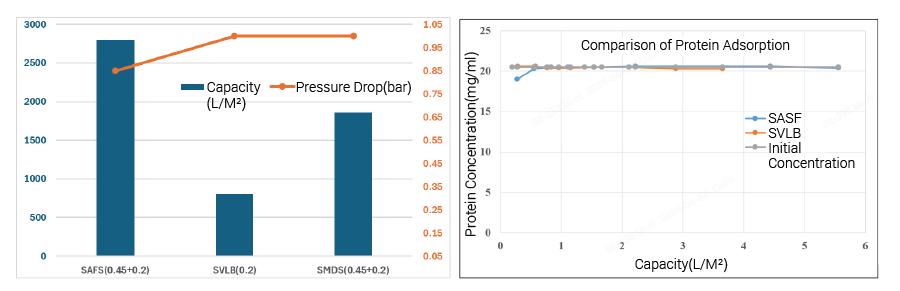
For highly hydrophobic ADC products, special attention must be paid to non-specific binding between ADC molecules and the sterilizing membrane. This means that filtration evaluation should go beyond just capacity—it must also address adsorption between ADC molecules and the filter, as well as adsorption of relevant excipients, to identify the optimal filter model. Client feedback and nternal studies confirm that Cobetter's PES and PVDF sterilizing filters fully meet capacity requirements while demonstrating extremely low protein and excipient adsorption. The graphs below show the capacity (600 LMH) and adsorption data from a Pmax test for ADC sterilization.
Cobetter is driven by filtration innovation and a customer-first mindset, and delivers complete solutions, from filtration and single-use products to validation, optimization, and full regulatory support, empowering our partners to build their own pride of Chinese manufacturing.


